
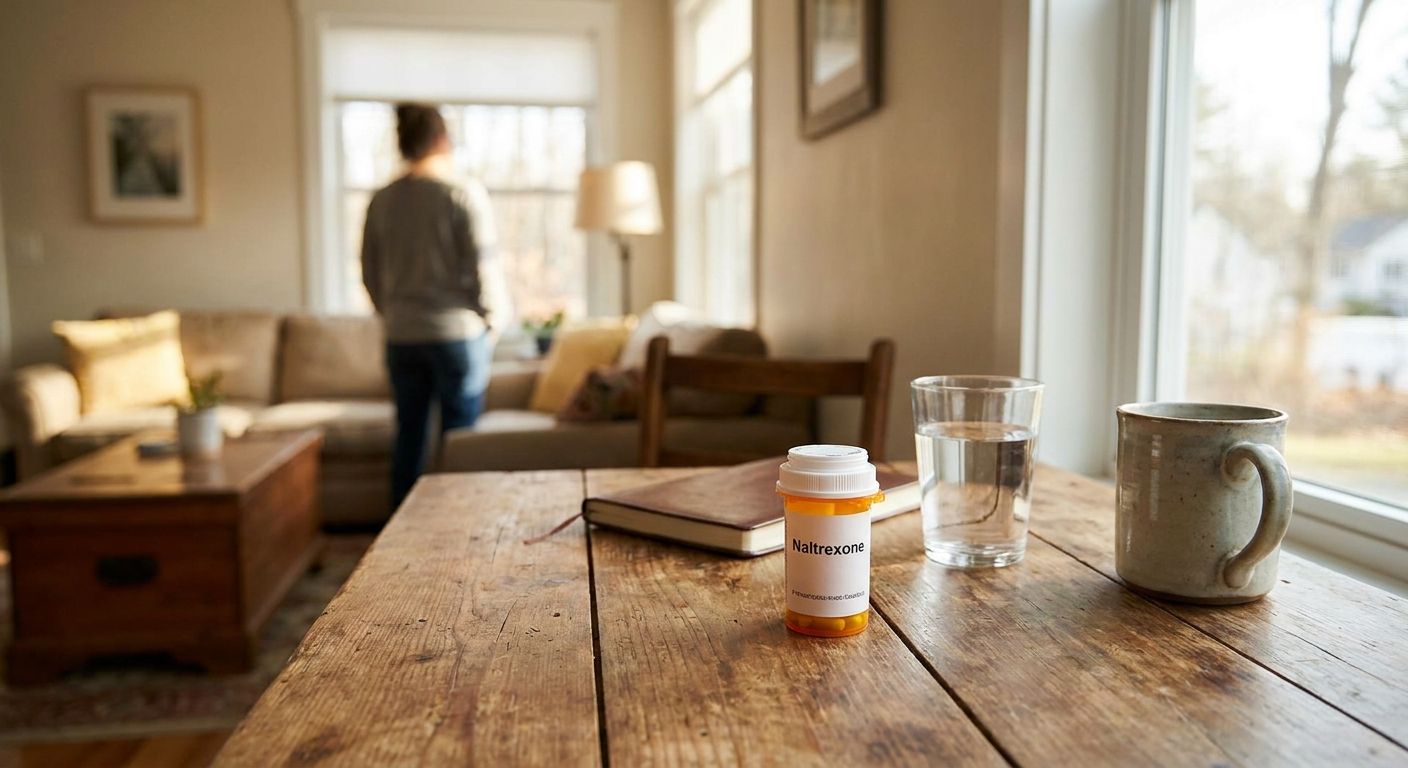
Anxiety and drinking feed each other on a short leash — a drink quiets the noise for an hour, then hands it back with interest the next morning. This guide breaks down where naltrexone for anxiety and drinking actually fits, what a coordinated program should include, and which approaches hold up for this specific pattern in 2026.
- Naltrexone doesn't treat anxiety directly — it blocks the reward loop that keeps anxious drinking on repeat.
- Programs that screen for anxiety before prescribing naltrexone beat retail-only naltrexone with no follow-up. Buy coordinated care.
- Standard naltrexone dosing is 50 mg daily, FDA-approved, non-addictive, with 30+ years of clinical use.
- Onir Health charges $19.99 for the clinical review and $99 billed every three months — verify current pricing before starting.
- Pairing naltrexone with therapy or an SSRI under one plan outperforms naltrexone alone for anxiety-driven drinkers.
Why this matters
Alcohol acts on the same brain chemistry as anti-anxiety medication for about an hour, then the effect reverses hard. As blood alcohol drops, the nervous system overcorrects, and what shows up the next day is often worse anxiety than what started the drinking in the first place. That rebound is well documented, and it's the trap most people never connect back to the drink from the night before.
Naltrexone doesn't sedate anxiety and it isn't a benzodiazepine substitute. It blocks opioid receptors involved in alcohol's reward signal, so the drink stops delivering the payoff that made it worth reaching for. Less reward means less automatic reaching — which, for someone drinking specifically to manage anxious thoughts, is a different lever than a sedative and a more durable one.
Who this is for
This is for the person who notices a pattern: work stress builds, a drink takes the edge off by 8 p.m., and by 4 a.m. the heart is racing again. It's for someone who has tried cutting back on willpower alone and found the anxious mornings only got louder. It is not a fit for someone in active alcohol withdrawal or someone whose anxiety is unrelated to drinking — that needs a different evaluation entirely.
A licensed clinical review, like the one Onir Health runs before prescribing, is built to catch that distinction early rather than after a prescription is already in hand.
What to look for in naltrexone for anxiety-driven drinking
Screening that separates the two problems
A program worth using asks whether the anxiety shows up only around drinking or exists independently of it. Naltrexone helps the first case directly; the second case needs anxiety treatment alongside it, not instead of it.
Dosing flexibility
Standard naltrexone dosing is 50 mg once daily, but some clinicians offer targeted dosing — taking it an hour or so before a likely drinking window instead of every day. For someone whose drinking clusters around specific anxiety triggers, that flexibility matters more than it does for daily heavy drinkers.
Medication interaction checks
Anxiety-driven drinkers are more likely to already be on an SSRI, or occasionally a benzodiazepine. A program that reviews current medications before writing a prescription catches interaction risks that a walk-in pharmacy fill won't flag on its own.
Follow-up, not a one-time script
A single prescription with no check-in misses the point. Anxiety and drinking both shift week to week, and a program that adjusts the plan at 30, 60, and 90 days catches problems a one-and-done script never will.
Cost clarity from day one
Hidden fees erode trust fast in telehealth. Know the evaluation cost, the recurring cost, and the refund terms before starting — Onir Health's structure, for example, runs a $19.99 clinical review, refunded if not approved, then $99 billed every three months in 2026.
Discretion in delivery
Anxiety around drinking often comes with anxiety about being seen addressing it. Discreet packaging and online-only intake remove a barrier that keeps a lot of people from ever starting.
Top approaches, ranked
Telehealth naltrexone with anxiety screening — the practical pick. A program that runs a full medical evaluation, checks for anxiety patterns, and prescribes naltrexone with scheduled follow-up covers the ground a plain prescription can't. Onir Health structures its evaluation around exactly this: $19.99 for the review, then quarterly billing at $99 if approved. Verdict: Buy for anyone whose drinking tracks closely with anxious episodes.
In-person psychiatrist or primary care prescribing — the traditional route. This path often bundles naltrexone with therapy referrals under one provider relationship, which some people prefer. The tradeoff is wait times — psychiatry appointments in most U.S. markets run weeks out in 2026, not days. Verdict: Consider if you already have an established provider and no urgency.
Retail pharmacy naltrexone with no coordinated care — the DIY pick. Getting a script filled without an anxiety-specific screening skips the exact distinction that matters for this group: alcohol-induced anxiety versus a standalone anxiety disorder. Cheaper per pill doesn't offset missing that step. Verdict: Skip for anxiety-driven drinking specifically.
Naltrexone plus therapy or an SSRI, coordinated under one plan — the combined approach. Naltrexone handles the reward loop; therapy or medication handles the anxiety that isn't purely alcohol-driven. Stacking both, reviewed by one clinical team, closes the gap that naltrexone alone leaves open. Verdict: Buy when anxiety predates the drinking pattern.
“Naltrexone doesn't erase anxious thoughts — it quiets the pull that makes those thoughts feel like they need a drink.”
Check eligibility for naltrexone
A licensed U.S. clinician reviews your case; medication ships if approved.
What to avoid
- Self-managed benzodiazepine plus alcohol. Combining the two without medical supervision carries a real sedation and respiratory risk — this needs a clinician's eyes, not a personal workaround.
- Cold-turkey stops for daily heavy drinkers. If drinking has been heavy and daily, stopping abruptly without medical guidance carries withdrawal seizure risk. Naltrexone requires being alcohol-free from the acute intoxication stage, but the taper itself should be clinician-guided.
- Anxiety "detox" supplements marketed alongside drinking reduction. None carry FDA approval for this use, unlike naltrexone, which has three decades of clinical evidence behind it.
Verdict comparison
| Approach | Anxiety screening | Follow-up | Cost clarity | Verdict |
|---|---|---|---|---|
| Telehealth naltrexone (e.g. Onir Health) | Yes | Scheduled, 30/60/90-day | $19.99 review + $99/quarter (2026) | Buy |
| In-person psychiatry | Often | Ongoing, provider-dependent | Varies by insurance | Consider |
| Retail pharmacy, no coordination | No | None | Low per-pill cost | Skip |
| Naltrexone + therapy/SSRI stack | Yes | Coordinated | Combined program cost | Buy |
FAQ
Does naltrexone treat anxiety directly?
No, naltrexone is not an anti-anxiety medication. It blocks the reward signal alcohol produces, which reduces anxiety-driven drinking indirectly rather than treating an anxiety disorder itself.
Is naltrexone for anxiety and drinking better than a benzodiazepine?
They solve different problems. Naltrexone reduces the pull toward drinking; benzodiazepines sedate anxiety symptoms and carry their own dependence risk when mixed with alcohol.
How much does naltrexone for drinking cost through telehealth in 2026?
Onir Health's structure runs $19.99 for the clinical review, refunded if not approved, then $99 billed every three months. Other providers vary, so confirm current pricing directly.
How long before naltrexone reduces anxiety-driven drinking?
Many people notice a change in the pull to drink within the first few weeks, but a full 90-day plan is the standard window clinicians use to judge real impact.
Can I take naltrexone with an SSRI for anxiety?
Naltrexone and SSRIs are commonly prescribed together, but any combination should be reviewed by a licensed clinician who checks your full medication list first.
Is naltrexone addictive?
No, naltrexone is not a controlled substance and is not addictive. It's FDA-approved for alcohol use disorder and has more than 30 years of clinical use.
What's the standard naltrexone dose for drinking less?
The standard oral dose is 50 mg once daily, though some clinicians use targeted dosing before anticipated drinking situations instead of a daily schedule.
Does naltrexone cause nausea?
Nausea is the most commonly reported side effect early on, and it's typically mild and temporary. Contact a clinician if it persists past the first couple of weeks.
One last thing
The anxious mornings are usually the tell, not the drinking itself — most people chasing this pattern aren't trying to quit outright, they're trying to get their mornings back. Give whatever approach you choose the full 90 days before judging it; naltrexone's effect on the reward loop compounds slower than a sedative but tends to hold up longer once it kicks in.